Research Overview
Metabolism is a whole-body process. Organs continuously exchange nutrients, lipids, bile acids, and other metabolites through the circulation. However, how these metabolic signals coordinate organ function and how their exchange is disrupted in disease remains poorly understood.
The BAE Laboratory investigates inter-organ metabolite exchange in diabetes, cardiometabolic disease, and cancer. We are particularly interested in bile acids beyond their traditional roles in digestion and enterohepatic circulation, including their production by extrahepatic organs and their effects on distant tissues.
By combining arterio-venous metabolomics, stable-isotope tracing, computational mass spectrometry, and physiologically relevant disease models, we aim to discover previously unrecognized metabolic pathways and translate them into new biomarkers and therapeutic strategies.
Current Research Projects (*co-first and #co-corresponding authors)
1. Inter-Organ Metabolite Exchange in Health and Disease
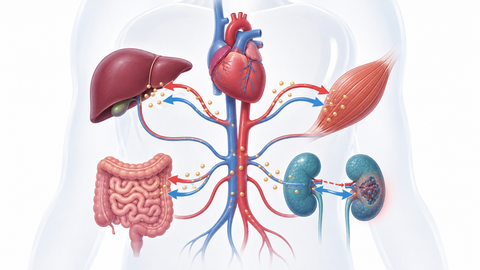
Traditional metabolomics measures metabolite concentrations but cannot determine which organs produce or consume them. We use arterio-venous metabolomics, comparing blood entering and leaving individual organs, to quantify organ-specific metabolite uptake and release.
Using animal models and human samples, we investigate how metabolic exchange is rewired in diabetes, cardiovascular disease, cancer, and other systemic disorders. We study how insulin
resistance and atherosclerosis alter the exchange of glucose, amino acids, lipids, and other circulating metabolites, as well as how tumors consume nutrients, release metabolites, and influence distant organs.
Our goal is to identify disease-associated metabolites and metabolic pathways that may serve as biomarkers or therapeutic targets.
Bae H. et al. Emerging Technologies and Future Directions in Interorgan Crosstalk Cardiometabolic Research. Circulation Research (2025).
Bae H. et al. Cross-organ metabolite production and consumption in healthy and atherogenic conditions. Cell (2025).
Bae H. et al. Arteriovenous metabolomics in pigs reveals CFTR regulation of metabolism in multiple organs. Journal of Clinical Investigation (2024).
Bae H. et al. Metabolic flux between organs measured by arteriovenous metabolite gradients. Exp Mol Med. (2022).
2. Bile Acids Beyond Enterohepatic Circulation
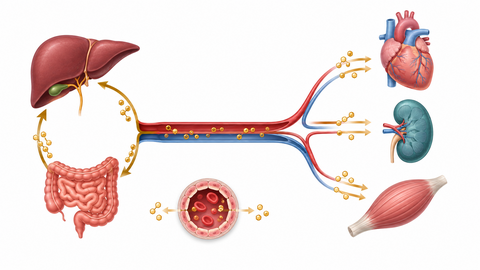
Bile acids are traditionally viewed as liver-derived molecules that circulate between the liver and intestine. Our work suggests that bile acid metabolism extends across multiple extrahepatic organs.
We investigate how organs take up, modify, and release bile acids and how systemic bile acid exposure affects distant tissues. Our goal is to determine how altered bile acid exchange contributes to cellular stress, inflammation, vascular dysfunction, and ultimately metabolic disease.
Bae H. et al. Cross-organ metabolite production and consumption in healthy and atherogenic conditions. Cell (2025).
Lee CK, Jeong SH, Jang C, Bae H. et al. Tumor metastasis to lymph nodes requires YAP-dependent metabolic adaptation. Science (2019).
Choi SY*, Bae H*, Jeong SH*, et al. YAP/TAZ direct commitment and maturation of lymph node fibroblastic reticular cells. Nature Communications (2020).
3. Discovery of Novel Metabolites and Metabolic Pathways
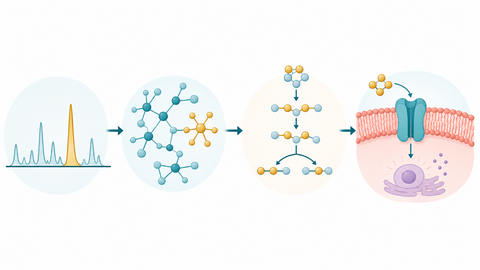
Many circulating metabolites remain structurally unidentified and functionally unexplored. These molecules may arise through interactions among host organs, diet, and the gut microbiome and may include previously unrecognized bile acid conjugates.
We combine untargeted mass spectrometry, molecular networking, stable-isotope tracing, and biochemical validation to discover these molecules, identify their tissue origins, and define their biological functions. This work may reveal new metabolic pathways, biomarkers, transporters, and therapeutic targets.
Lopez ML*, Kang T*, Bae H#, Jang C#. Intestinal fructose catabolism promotes obesity and insulin resistance via ileal lacteal remodeling. Science Advances. (2026).
Jung S*, Bae H*, Song WS* et al. Dietary fibre-adapted gut microbiome clears dietary fructose and reverses hepatic steatosis. Nature Metabolism (2025).
Bae H. et al. Angiopoietin-2–integrin α5β1 enhances vascular fatty acid transport and prevents ectopic lipid–induced insulin resistance. Nature Communications (2020).
Our Research Approach
Our laboratory brings together complementary technologies to study metabolism from individual molecules to the whole body:
- Arterio-venous metabolomics to quantify organ-specific metabolite uptake and release
- Stable-isotope tracing to map metabolic pathways and determine the origins and fates of circulating metabolites
- Computational mass spectrometry-based metabolomics and lipidomics to measure known metabolites and discover previously unrecognized molecules
- Molecular and biochemical studies to define the enzymes, transporters, receptors, and signaling pathways underlying metabolic exchange
- Single-cell transcriptomics and spatial metabolomics to resolve metabolic processes within complex tissues
- Animal models, human samples, and large-animal physiology to connect mechanistic discoveries with human disease
Through this integrative approach, we seek to move beyond static measurements of metabolite abundance and determine how metabolites actively flow among organs, communicate biological information, and shape disease.